Hainwise Medical Technology Co.,Ltd
- E-mail: info@hainwise.com
Hainwise Medical Technology Co.,Ltd
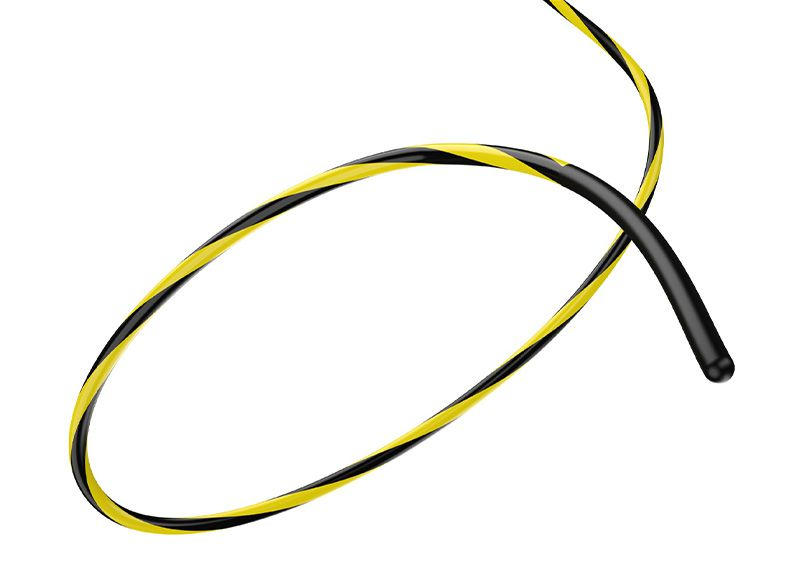
In gastrointestinal (GI) procedures, safety is paramount. Zebra guidewires for the gastrointestinal tract are specially designed to provide secure navigation through delicate and tortuous anatomy while minimizing the risk of injury to tissues. Understanding the safety features of these guidewires helps hospitals, clinics, and procurement professionals ensure high-quality care and procedural success.

One of the primary safety features of Zebra guidewires is their flexible tip.
Soft distal tip: Reduces trauma to mucosal linings and prevents perforation during navigation.
Shaped or tapered tips: Allow precise navigation through bends and curves in the GI tract without causing mechanical stress.
Radiopaque tips: Enhance visibility under fluoroscopy, ensuring that the tip position is always accurately monitored.
Clinical benefit: Flexible tips minimize the risk of perforation or tearing, especially in narrow or tortuous sections of the GI tract, such as the duodenum or colon.
Hydrophilic coatings on Zebra guidewires provide slippery surfaces when in contact with fluids, which contributes significantly to procedural safety.
Reduces friction between the guidewire and the GI tract walls.
Facilitates smooth passage of endoscopic or interventional devices.
Lowers the risk of scraping or damaging mucosa.
Outcome: Enhanced maneuverability allows clinicians to perform complex procedures with minimal tissue trauma.
High-quality Zebra guidewires are engineered to accurately transmit torque from the operator to the tip.
Ensures precise directional control.
Reduces accidental misplacement or excessive force on the intestinal walls.
Maintains stability even in challenging anatomy.
Why it matters: Controlled torque minimizes procedural errors, reduces patient risk, and improves overall safety during interventions.
Radiopacity is a critical safety feature for Zebra guidewires:
Real-time visualization allows clinicians to track the wire’s exact location during procedures.
Prevents inadvertent puncture, perforation, or misplacement.
Marker bands or radiopaque tips provide reference points for safe advancement.
Clinical significance: Clear imaging reduces complications and provides operators with confidence during both diagnostic and therapeutic GI procedures.
The core material of Zebra guidewires contributes to structural safety.
Stainless steel or nitinol cores resist kinking and maintain shape under stress.
Durable construction prevents guidewire breakage inside the GI tract.
Flexible yet strong materials allow safe navigation through complex anatomical paths.
Procurement insight: Selecting a guidewire with high material integrity is essential to avoid intra-procedural complications.
Safety is enhanced when Zebra guidewires are fully compatible with endoscopes, catheters, and therapeutic tools.
Reduces the risk of device mismatch or mechanical interference.
Ensures smooth insertion and withdrawal without exerting unnecessary force.
Supports a range of interventions, from stent placement to biopsy and foreign body retrieval.
Benefit: Safe integration with devices prevents procedural errors and protects patient tissue.
High-quality Zebra guidewires are designed to either be single-use or safely reusable.
Single-use guidewires prevent cross-contamination and infection.
Reusable wires maintain performance standards through proper sterilization.
Packaging ensures sterility until the point of use.
Impact on safety: Proper handling and sterilization standards minimize infection risk and maintain procedural integrity.
Zebra guidewires meet stringent international safety and quality standards:
ISO 13485 compliance for medical devices.
CE marking for regulatory adherence.
FDA approval for clinical use in the United States.
Significance for procurement: Certification ensures the guidewires are manufactured under strict quality control processes, reducing risk for both patients and clinicians.
Reduced Risk of Perforation: Flexible tips and hydrophilic coatings protect delicate tissues.
Enhanced Operator Control: Controlled torque and radiopacity increase procedural precision.
Reliable Performance: Durable materials and kink resistance prevent in-procedure failures.
Minimized Infection Risk: Sterile packaging and single-use options maintain clinical safety.
Support for Complex Procedures: Enables safe navigation in challenging GI anatomies.
The demand for safer, more reliable Zebra guidewires is growing as minimally invasive GI procedures become more common. Emerging trends include:
Advanced Coatings: Anti-friction, antimicrobial, or hybrid coatings that enhance safety.
Improved Radiopacity: Higher contrast marker bands for clearer imaging.
Customizable Tips: Tailored to specific procedures, including pediatric or high-risk patients.
Integration with Imaging Systems: Better alignment with advanced fluoroscopy or navigation tools for safer guidance.
Safety is a core consideration in gastrointestinal interventions, and Zebra guidewires for the GI tract are designed to meet the highest safety standards. Flexible tips, hydrophilic coatings, radiopacity, controlled torque, durable materials, and device compatibility collectively ensure procedural precision and reduce patient risk. For procurement professionals, understanding these safety features is crucial when selecting guidewires, as it directly affects patient outcomes, clinician confidence, and operational efficiency in GI procedures.
Previous Post: None
Next Post: Radiopacity Importance in Zebra Guidewires for Gastrointestinal Tract
Related Products